.webp)

Individuals with disabilities face a double burden: managing their primary physical, cognitive, or sensory conditions while simultaneously navigating the societal barriers—including ableism, discrimination, and chronic stress—that severely impact their mental health. Statistics show that adults with disabilities are up to five times more likely to report frequent mental distress compared to those without disabilities.
Yet, this very population encounters a maze of obstacles when seeking the therapy they need. From inaccessible physical offices to a lack of provider competence, these mental health barriers for disabled people are systemic issues that demand urgent attention.
At Riaz Counseling in Houston, Texas, we believe mental health care is a fundamental right. We are committed to dismantling the walls that prevent equal access. This comprehensive guide will illuminate the specific hurdles disabled individuals face in accessing therapy, detail the profound effects of unmanaged mental health in this community, and outline the actionable steps and specialized solutions available to ensure truly accessible and affirming care.
Therapy accessibility means that all individuals, regardless of their disabilities experience, can receive mental health services without facing unnecessary hurdles. In a large city like Houston, this includes everything from physically getting to an appointment to being understood by a mental health professional.
Unfortunately, many health care providers are not equipped to meet these needs, creating significant gaps in care. Understanding your rights under laws like the Americans with Disabilities Act (ADA) is the first step in ensuring you can access the support you deserve. We will explore the common barriers and how to overcome them.
When we talk about accessibility in mental health services, it goes far beyond a wheelchair ramp. It involves creating an environment where every client feels seen, heard, and supported. This includes how health care providers communicate, the flexibility of their services, and their attitudes toward disability.
True accessibility considers the full spectrum of human diversity. This means offering materials in plain language, providing sign language interpreters, or using digital tools to connect with clients. It is about an inclusive mindset that doesn't view a disability as something to be "fixed" but as a dimension of difference.
Ultimately, accessible design in mental health care facilities and practices is a requirement under the Disabilities Act. It is a fundamental part of providing equitable and effective care, ensuring that barriers like stigma or poor communication don't stand in the way of a person’s well-being.
Accessible therapy directly leads to better mental health outcomes. When you can easily connect with a therapist who understands your needs, you are more likely to get the effective support necessary for managing mental health conditions. This can reduce feelings of isolation, anxiety, and depression that often accompany chronic health conditions.
Improving access has a powerful ripple effect on your quality of life. It empowers you to participate more fully in your community, work, and relationships. It’s not just about treating a condition; it's about building a life with meaning and connection.
This is true for people with all types of disabilities. Whether you have physical, cognitive, or intellectual disabilities, you deserve mental health support that is tailored to you. Accessible care recognizes that your emotional concerns are valid and should be addressed with compassion, not dismissed as just "part of the disability."
Your legal rights are a powerful tool for advocacy. The Americans with Disabilities Act (ADA) and the Rehabilitation Act are federal laws that protect you from discrimination and require that mental health providers offer reasonable accommodations. This can include anything from an accessible office to providing a sign language interpreter.
In addition to federal laws enforced by the Department of Justice, the state of Texas has its own guidelines that reinforce these protections. Knowing about both can help you ensure your needs are met.
Here is a simple breakdown of these protections:
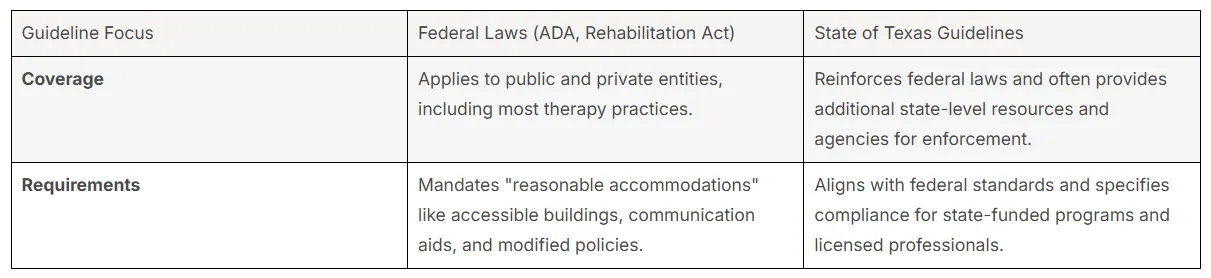
Understanding these legal rights empowers you to ask for what you need. Do not hesitate to advocate for yourself when seeking therapy.
Disabled clients often face a variety of obstacles when trying to address their mental health concerns. These hurdles are not just minor inconveniences; they can prevent people from getting help altogether. These challenges can be grouped into several categories, from physical barriers to systemic issues within the public health system.
In the sections below, we will take a closer look at these challenges. We will explore the physical and transportation difficulties in Houston, communication and cognitive barriers in sessions, and the financial hurdles that many disabled clients encounter when seeking care for mental health issues.
For individuals with physical disabilities, one of the most immediate barriers is simply getting to the therapist's office. Many buildings in Houston are old and may lack accessible design features like ramps, elevators, or automatic doors, making entry difficult or impossible.
Transportation can also be a significant challenge. While the City of Houston has made efforts to improve public transit, navigating a large urban area can still be daunting. When choosing a therapy provider, these logistical issues must be considered.
Here are a few tips for navigating Houston’s landscape:
Community support and city initiatives are slowly improving the situation, but self-advocacy remains crucial for those with mobility needs.
Effective therapy relies on clear communication, which can be a major hurdle for people with sensory, cognitive, or intellectual disabilities. Some health care providers may lack the training to interact effectively with clients who use augmentative communication devices or who require information to be presented in a simpler format.
This barrier is not insurmountable. With patience and the right tools, meaningful therapeutic work can happen. It is important for both the client and the therapist to be upfront about communication needs from the very beginning.
Here are some solutions that can help bridge the gap:
Therapists must be willing to adapt and learn. Specialized training, such as understanding cognitive behavioral therapy for diverse populations, helps ensure everyone can benefit from counseling.
The cost of therapy is a significant barrier for many, but it can be especially challenging for disabled individuals. People with disabilities are more likely to be unemployed or underemployed, making it difficult to afford medical expenses.
Health insurance coverage for mental health services can be complicated. While some services may be covered, you might find that policies don't fully cover specialized support or that out-of-pocket costs are too high. This financial strain often forces people to prioritize physical care over mental health, which can negatively impact their overall quality of life.
Here are a few strategies to find affordable therapy:
Navigating both public and private insurance systems can be difficult, but persistence is key to finding the support you can afford.
Now that we have covered the barriers, let's focus on solutions. Finding accessible mental health services in Houston is possible with the right approach and resources. The key is knowing what to look for in mental health providers and where to turn for support.
The following sections will provide practical guidance on your search. We will outline steps to identify an inclusive professional counselor, explore the benefits of telehealth, and highlight local Houston organizations, like those with an outreach program manager, that are dedicated to helping you connect with the care you need.
Finding the right therapist is a critical part of your mental health care journey. You need a licensed professional counselor who is not only qualified but also committed to providing an inclusive and accommodating experience. Start by researching potential health care providers online.
When you have a shortlist, don't be afraid to ask direct questions before booking an appointment time. Think of it as an interview—you are seeing if they are the right fit for you. Their willingness to answer your questions is a good indicator of their approach to care.
Here are some questions to ask a potential provider:
Checking for reviews from other clients and verifying their credentials can also help you choose the best provider for your needs.
The rise of telehealth services has been a game-changer for many disabled individuals. Remote therapy removes physical and transportation barriers, allowing you to access mental health treatment from the comfort of your home. This can be especially beneficial if you live with chronic pain or mobility challenges.
Many digital tools and platforms are designed to meet the needs of people with various disabilities. However, it's important to ensure the platform itself is accessible.
Consider these features when exploring online options:
While telehealth is a fantastic option, it's not without its own challenges, such as the need for a reliable internet connection. Even so, these services are an encouraging step forward in making mental health care more inclusive.
You don't have to navigate this journey alone. Houston is home to many community and advocacy organizations that provide valuable support services. These groups can help you find resources, connect with accessible therapists, and advocate for your rights.
Many of these organizations have an outreach program manager or case workers who can offer personalized guidance. They are often well-connected with local government agencies and other nonprofits, creating a strong support network. Even national groups like the United Cerebral Palsy Association have local chapters that can help.
Here are some types of organizations to look for in the Houston area:
Contacting these groups can provide you with the information and encouragement needed to find the right care.
Mental health providers have a professional and ethical responsibility to make their services accessible to everyone. An inclusive practice is not just about legal compliance; it is about providing compassionate and effective care. A professional counselor who prioritizes accessibility demonstrates a commitment to serving all clients, regardless of their health conditions.
The following sections will explore concrete steps that mental health care providers can take. We will discuss modifying physical spaces, adapting therapeutic techniques, and using technology to create a more welcoming and effective environment for disabled clients.
A therapy office should be a safe and welcoming space for everyone, including individuals with mobility needs. For clients with conditions like spina bifida or cerebral palsy, an inaccessible office is an immediate barrier to care. Modifying the physical environment is a foundational step toward inclusivity.
These modifications are often required by the Americans with Disabilities Act, but going beyond the bare minimum shows a genuine commitment to accessible design. Simple changes can make a world of difference in a client's ability to attend and feel comfortable during sessions.
Therapists can improve accessibility with these changes:
These practical steps demonstrate respect for clients' needs and remove unnecessary stress from the process of seeking therapy.
Effective therapy is never one-size-fits-all. For clients with developmental disabilities or other cognitive differences, traditional talk therapy may not be the best approach. Therapists must be willing to adapt their techniques to meet the specific needs of each client.
This means moving beyond rigid protocols and embracing flexibility. For example, a therapist might need to adjust the pacing of sessions, use visual aids, or modify cognitive behavioral therapy exercises to be more concrete. The goal is to ensure the person's mental health is being addressed in a way they can understand and engage with.
Here are some ways to adapt therapeutic sessions:
Continuing education and collaboration with specialists in developmental disabilities can help therapists build the skills needed to address a wider range of mental health concerns effectively.
Technology offers powerful solutions for mental health care providers looking to improve accessibility. Digital tools and telehealth services can bridge gaps for clients who face physical, transportation, or even social anxiety barriers that make in-person remote therapy difficult.
By embracing these technologies, therapists can expand their reach and provide consistent care to more people. Choosing the right platforms is key, as not all are created equal. The best tools are those designed with accessibility in mind from the start.
Mental health care providers can use technology to:
Customizing these digital solutions helps meet the individual needs of clients with various health conditions, making therapy more accessible than ever.
At Riaz Counseling, we view therapy accessibility for disabled people not just as a compliance checklist, but as a core value. We are dedicated to creating a truly safe, welcoming, and knowledgeable therapeutic environment for all residents of Houston, Texas.
Riaz Counseling stands ready to offer the competent, compassionate, and accessible mental health services that the disability community in Houston, Texas, critically needs and deserves.
The mental health barriers for disabled people are not insurmountable. By raising therapy accessibility awareness and implementing solutions like robust telehealth and disability-affirmative training, the mental health community can, and must, do better.
If you are a disabled individual in Houston, Texas, struggling with the weight of anxiety, depression, or chronic stress, know that your desire for mental wellness is valid, and the right support is available. You deserve a therapist who understands your unique challenges without diminishing your strength.
Seeking help is an act of profound self-advocacy. Let Riaz Counseling be your partner in navigating life's challenges, free from the additional hurdles of inaccessible care.
Take the courageous step toward accessible, affirming care. Contact Riaz Counseling today to schedule your confidential, virtual consultation.
In Houston, you can find a professional therapist by asking your primary care provider for referrals, contacting local disability advocacy groups, or searching online directories for providers specializing in inclusive mental health care. You can find expert support for managing problems at Riaz Counseling.
Look for an accessible counseling provider who communicates clearly about their accommodations, has experience with your specific needs, and offers a welcoming environment. Ask about physical accessibility, communication aids, and telehealth options. You can find expert support for managing problems at Riaz Counseling.
Yes, affordable therapy options are available for disabled individuals in Texas. Check with local community health centers for sliding-scale fees, ask therapists if they offer reduced rates, and explore state-funded programs for mental health care. You can find expert support for managing problems at Riaz Counseling.
Practice self-advocacy by being upfront about your mental health needs and required accommodations. Don’t hesitate to ask questions, request different therapeutic approaches, and provide feedback on what is or isn't working during counseling. You can find expert support for managing problems at Riaz Counseling.
If you feel that you or someone you know, may benefit from therapy, please reach out to our office for a FREE 15 minute consultation: LINK
Stay informed about the latest research in psychology.
.png)
Navigating dual-parent family challenges with practical strategies for balance, communication, and well-being.
.png)
Benefits of dual-parent households in Houston for child development, stability, and well-being
.png)
Heal after a breakup in Houston with self-care strategies, local experiences, and professional counseling support.

Interested in a job with Riaz Counseling? Looking for Supervision for your license? Let’s Connect! We look forward to speaking with you to see if we would be a great fit for each other.
