.webp)

While Houston, Texas, is known for its mild winters, people still feel the effects of less sunlight on their mental health. The days in winter get shorter and the sky often looks gray. A lot of people feel a difference because of this. It can lead to something called seasonal affective disorder, or winter depression. This affective disorder can be hard for many. It might change how they feel during the season. For those with winter depression, their mental health can feel like a struggle. This happens even in places that do not get very cold.
Seasonal depression, also called SAD, is a type of major depression. It does not happen because of problems or stress in your life. It starts from things around you, like less daylight hours in winter. A big cause of seasonal depression is when there is less sunlight in cold weather.
Knowing what brings on seasonal depression in the winter can help you deal with it. It is not just the cold. The time change and fewer daylight hours bring a big change in how our body works and how we act. This change can affect our chemistry and disturb our natural body cycle.
At Riaz Counseling in Houston, we want you to see the signs of SAD early. We are here to help you use ways that are trusted and that work well. There is a goal to keep your emotional stability strong all year. This simple guide talks about how winter can change your body and what you do. It will also tell you some easy steps you can use to manage SAD in Houston, Texas.
Seasonal affective disorder is a type of affective disorder. It causes mood changes and can lead to depressive episodes during certain seasons. A lot of people feel these symptoms in the fall or winter. When spring brings more sunlight, the symptoms usually get better. Many think this only happens in places that are cold or far north, but anyone can have seasonal affective disorder no matter where they are.
Even in Houston, where winters are not that cold, people feel this way. The main reason is not just the cold but how daylight changes. This change can affect your body. If you know signs of SAD, that can help you understand what you feel. Let’s talk about what SAD is and how it shows up in Houston.
Seasonal affective disorder is a kind of affective disorder. It is a type of depression that shows up at the same time every year. People with seasonal affective disorder often feel sad symptoms for about four to five months, then feel better when the season changes. But it is not just about being sad. This condition can make a person feel many other depressive symptoms that make daily life tough. These symptoms come during a certain time of year and start to go away when that time ends.
To get an official diagnosis, you must meet some rules. One key rule in the diagnostic criteria for seasonal affective disorder is that a person has to get depressive episodes at the same time of year for at least two years in a row. This proves there is a strong link between the time of year and changes in your mood if you have affective disorder.
These seasonal depressive episodes need to happen more than other types that have happened in your life. A pattern like this helps to show that the person might have SAD, not other types of depression that don't happen this way. A mental health professional will look at the pattern to make sure the diagnosis is right.
Many people say seasonal depression happens only where winters are cold. But this is not always right. The problem is seen more in places that are far from the equator. In states like New England and Alaska, people feel seasonal depression more. This is because daylight hours go down a lot during part of the year. In Texas and Florida, people get more sunlight and their daylight hours stay up. So, they do not have as much seasonal depression.
But living in Houston does not stop you from getting SAD. Even though the number of cases is smaller, there are still some people who feel their quality of life go down. A small change in daylight, even if it is not much, can still bring on symptoms in people who feel SAD easily.
There are two types of affective disorder that happen with the seasons. One type comes in the winter, and the other starts in summer. Is there any change in the way seasonal affective disorder is diagnosed between winter and summer? The main diagnostic criteria stay the same for both types. A person needs to have episodes that return each season for at least two years. The key difference is when the episodes show up and what symptoms a person will have. For instance, in winter, people often sleep a lot. In summer, people can find it hard to sleep.
When mental health professionals talk about SAD, they follow set guidelines. SAD is not listed as its own illness in the statistical manual of mental disorders. Instead, you will find it used with major depression and bipolar disorder. In these cases, it is shown as "with seasonal pattern."
This difference matters when you want to understand the rules for getting a diagnosis. To be diagnosed, you have to meet all the signs of major depression first. After this, there must be a clear way that symptoms show up during each time of the year. The parts below will tell you more about the DSM-5 rules and what major signs you need for an official diagnosis.
The American Psychiatric Association gives the official rules for telling if someone has seasonal affective disorder in the DSM-5. A person must follow the "with seasonal pattern" rule to get a diagnosis for this affective disorder. This means there has to be a clear link between the season and when their depressive episodes and SAD symptoms begin.
A mental health professional will look at some key signs to be sure of this pattern. What are the real steps to find out if you have seasonal affective disorder? Here are the main things they check for.
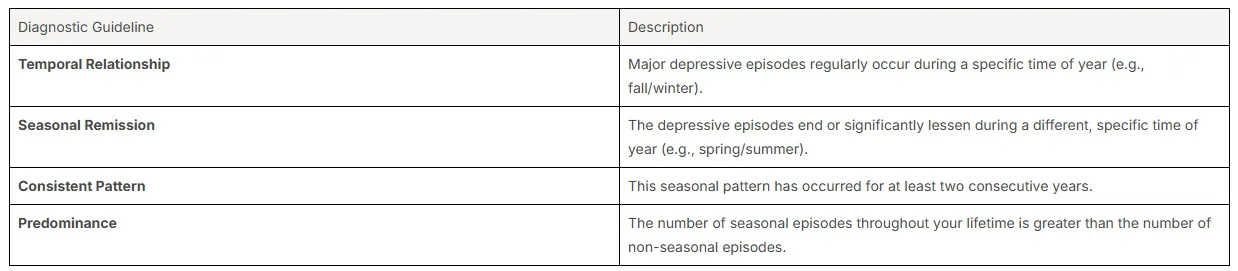
These rules help make sure the diagnosis is real and not just because of other things, such as holidays or what people do at work every year. The most important thing is to see how the body changes with each new season.
Before you notice a seasonal pattern in symptoms of depression, there need to be clear signs of the mood disorder. A doctor checks for signs that show you might be in a major depressive episode before saying you have it. These signs can make it hard for people to get on with daily life.
A doctor looks at different signs to see if a person may have affective disorder. These signs often stay for at least two weeks. This helps a doctor know if someone has seasonal affective disorder. The main symptoms a doctor looks for are:
These signs can be seen in every type of depressive disorder. For a doctor to say you have SAD, these signs must come at the same time every year. Then, they need to go away when another season starts. A regular pattern of depressive episodes is what sets SAD apart from other types.
The signs of SAD are more than just the usual "winter blues." A person can have a depressed mood. You may feel strong mood changes. These changes can get in the way of your daily life. SAD symptoms are a lot like what you find in major depression. But, this condition also has its own signs that stand out. These signs can change with the season.
Not everyone who has SAD will feel or go through the same things. But, it does help to know what signs you can spot in people. The list below has some things you may see, both in how someone feels and how someone acts. SAD can look different in the winter or in the summer. So, the signs you see can change with the time of year.
This mood disorder brings changes in how you feel. The way you act can be different, too. Your sleep patterns might change. Some people eat more, while others eat less. You could feel down, and sometimes you may not want to be around people. The mix of this mood and the changes in your body can be hard for some to handle.
If you want to notice seasonal affective disorder, there are some signs you should watch for. When it comes to the winter type of this affective disorder, you can see some clear things, like:
You need to take suicidal thoughts very seriously. If you feel this way, get help right away. A pattern with the seasons can help you know what is happening, but the most important thing is to look for strong feelings that stop you from living your life. This means you need support.
In Houston, you might see winter-pattern and summer-pattern SAD feel different. The reason is because the symptoms are not the same. In the winter months, the days have shorter daylight hours. This can change the way your body’s clock works. When there is less daylight, your body might not make enough vitamin D. That change can be bad for your mood.
The normal signs in the winter show that your body slows down. You may sleep a lot. You might feel like eating more foods like bread and pasta. You could put on some extra weight. Many people feel they want to be alone. This feeling of wanting to "hibernate" is a main sign of winter SAD. It is the kind of SAD that most people get.
Summer-pattern SAD can happen in the long, hot summer months. The signs you get are different from what you see in winter. You may find it hard to sleep, or you may not sleep at all. This is called insomnia. People can lose their appetite, which might lead to weight loss. They may feel nervous, jumpy, and have anxiety. The same diagnostic criteria are used when it happens, but seeing these signs in summer months tells doctors what is going on. This helps them make a correct diagnosis.
If you feel that you have SAD, do not try to figure it out by yourself. Talk to health professionals first. A health professional will give you a thorough evaluation. They will check the right diagnostic criteria. The doctor looks closely at your feelings to see if they match SAD. They make sure that nothing else is causing how you feel.
This process looks at a lot of things, not just how you feel at this time. A doctor will look at your medical history. They will also see if there is anything in your family background that could help. The time when your symptoms appear also matters. In the next parts, I will talk about how talking with you and using simple screening tools can help doctors get the right diagnosis.
A good patient history is important when checking for seasonal affective disorder. Your doctor needs to know when your symptoms begin and end. Affective disorder like this causes depressive episodes that come and go with the time of year. The patient history lets your doctor see how your mood disorder changes and if your feelings of being down match up with the weather or seasons. This is the main way for your doctor to find out if you have seasonal affective disorder.
During the interview, you will talk about when your symptoms begin, how long they stay, and when they go away. The doctor will ask you how the symptoms change your daily life, job, and the way you get along with other people. They may also ask what treatments you have tried before.
Your family history can help doctors know more. A problem like SAD can be seen in families. Your doctor might ask if people in your family have had depression, bipolar disorder, or other mental health problems. This talk gives your doctor a better idea so they can find the right diagnosis.
In a Houston clinic, a mental health professional will talk to you in detail to learn about your symptoms. The mental health professional may use special screening tools to check your mental health. If you want to know about testing for seasonal affective disorder, the important thing to know is there is no blood test or scan for this affective disorder. Instead, you will get specialized questionnaires, which are good to find out if you have a seasonal pattern in this disorder. These tools help the mental health professional understand your mood and symptoms better.
One tool that many people use is the Seasonal Pattern Assessment Questionnaire. This is a form that you fill out yourself, so you can show how your mood and what you do change during the year. There is also the Seasonal Health Questionnaire. This is a good tool, too. People use it to check for any seasonal changes.
These questionnaires help to see how you feel in different seasons, especially in key parts of your life. A mental health professional checks your answers. They look for patterns that show if you might have SAD or not. The main things they check are:
Many signs of SAD are much like the signs you see in other mood disorders. For example, bipolar disorder and major depressive disorder also have many of the same signs. Because these problems can look the same, your doctor needs to know if you have SAD or another mood disorder. This helps them find the best way to help you.
A right diagnosis needs a full checkup from health professionals. The reason for this is to be sure that the main issue is the seasonal pattern. If health professionals make a wrong diagnosis, the treatment may not help much. That is why they take extra care during the first checkup. The text below will talk about how health professionals look at SAD and major depression. It will also show how they rule out other problems before moving ahead.
It is good to know that seasonal affective disorder is a type of depression. The American Psychiatric Association says this is called major depressive disorder with a seasonal pattern. The main depressive symptoms, like feeling sad most of the time or losing interest in things, are the same in both types of depression.
So, how do you spot the difference between seasonal affective disorder and other types of depression during a diagnosis? The key thing about seasonal affective disorder is when it starts and how often it returns. A person with major depressive disorder can feel down at any time. But someone with seasonal affective disorder feels this way at the same time every year.
The key diagnostic differences include:
Seasonal affective disorder can look like other problems as they have similar symptoms. So, doctors need to do a thorough evaluation. They need to make sure they give the right diagnosis. Before they say it's seasonal affective disorder, doctors have to check for other medical and mental health conditions. That way, they know which affective disorder the person really has.
First, the doctor will need to check if you have any medical problems that feel like major depression. The doctor may look for things like an underactive thyroid, illnesses that last a long time, or not enough vitamins in the body. A substance use problem, like drinking too much alcohol or using too many sedatives, can also cause depressive symptoms. So, the doctor will check for these too.
On the mental health side, it is good to know the difference between seasonal affective disorder and bipolar disorder. Both affective disorder and bipolar disorder can start with the changing of the seasons. But, with bipolar disorder, there will be times when you feel very up, which is called mania or hypomania. Seasonal affective disorder does not have these parts. A doctor will also look at if it could be an adjustment disorder. This is when you feel depressive symptoms because of stress or a certain event, like the holidays, and not because of the season.
Figuring out SAD in Houston is more than looking at the calendar. The signs of depressive episodes can show up in different ways for people, because their life and where they live can be different. So, health professionals in mental health need to think about what is special about life in this place.
One important thing to talk about is age. SAD can look different in kids, teens, and adults. A doctor will often do a physical check-up to see if someone has it. This check-up helps make sure the symptoms are not caused by something else. There are other things to think about too, like what is normal where you live and why these exams are done. Let's go over these points together.
Yes, children and teens can get seasonal affective disorder. Affective disorder like SAD often starts in young adults between 18 and 30. But, this can be found in kids and those younger, too. A mental health professional can check your child or teen to know if they have this condition. Getting help from a mental health professional is a good idea for children, teens, and their families.
In children and teens, the signs might not always be classic sadness. Instead, you might see a lot of irritability that does not go away. There can be a drop in how they do at school. They may pull away from others or change the way they act. Noticing these signs is important to help them get support.
In Houston, the weather often gets hot and humid. Because of this, many people stay indoors during the summer. They do this to avoid the heat. When they stay inside, they get less sunlight. Not getting enough sun can cause summer-pattern sad symptoms. These can include feeling restless and having trouble sleeping. A clinician needs to think about these lifestyle choices when they look at sad symptoms.
Are physical exams part of finding out if someone has seasonal affective disorder? Yes, they are. Even if seasonal affective disorder is seen as a mental health problem, doctors start by doing a physical exam on you. A health worker, like a doctor, will also check your medical history. This helps them get more info about your health and about your affective disorder before moving ahead.
The main reason for these physical exams and lab tests is not to check if you have SAD. They are done to see if another health issue is causing your depressive symptoms. This step shows if your signs are from a physical sickness or if they are not. It helps tell if it is a mental problem instead of a body problem.
For example, your doctor can ask for lab tests to check how well your thyroid works. A problem in your thyroid, like hypothyroidism, can make you feel tired and low. Your doctor may also check your vitamin D levels. A low amount of vitamin D is linked to winter-pattern SAD. This can make your mood feel down. These tests give health professionals and mental health experts more good information. This helps them feel sure about the diagnosis.
If you feel you may have seasonal affective disorder, there is good news. You can get help, and this can make your life feel better again. There are several treatment options for affective disorder. These include light therapy, talk therapy, and medicine for depression. Many people feel best when they use more than one of these. A mix of these treatments can help make your quality of life better.
For winter-pattern SAD, people have used bright light therapy for many years. This is the main treatment for most people. A person sits near a light box each day. The box gives off a bright light that is like sunlight.
You can also use therapy and some medicine. These can help with both winter and summer-pattern SAD.
If you feel SAD, talk to a professional. They can help you find what will work best for you.
Light therapy, bright light, and bright light therapy are good ways to feel better.
Dealing with seasonal depression can feel hard, but you are not alone in this. At Riaz Counseling Services, there is a team of health professionals who are here to help with your mental health. We know how to find and treat issues like seasonal affective disorder and other affective disorder problems in the Houston area.
Our process starts with a full checkup. We want to know about the symptoms you feel. The team will check if you may have SAD. We also want to make sure that it is not any other condition that gives you trouble. The team takes time to understand all that you feel. Our goal is to give you a clear and correct diagnosis.
We work with you to find the best treatment plan. This may be therapy, talking to your doctor about other options, or finding ways to help with issues that come up. We make sure what we do fits what you need. The goal is to help you take care of seasonal depression and feel well the whole year.
If you feel signs of SAD in yourself, you can get better by taking small and early steps. A good way to start is to talk to a healthcare provider and have a checkup. They can help you see what is going on and guide you to effective treatments.
Along with getting professional help, there are some things you can do every day to help yourself. These small steps can work with what your doctor gives you. They will help you feel good and manage your symptoms. You can try these things:
When you use tips from your doctor with your own self-care, you feel better. This helps you and gives you a good start to take on SAD. By doing this, you can also make your mental health better.
If you live in Houston and feel like seasonal affective disorder might be happening to you, there are signs to watch for. The weather and the way the seasons change in the city can make symptoms feel worse for many people. When you know about the guidelines and the steps used to diagnose this, it helps you get the right mental health help. You can read about the official facts in the DSM-5. If you think that you or someone you care about has seasonal affective disorder, get support. A service like Riaz Counseling Services can help with affective disorder and other mental health needs. You can start by booking a free consultation. This is a good way to know what choices you have to feel better and take care of your mental health.
SAD is in the DSM-5, which stands for the Diagnostic and Statistical Manual of Mental Disorders, 5th Edition. It is called Major Depressive Disorder with Seasonal Pattern. There are some main things to know:
Riaz Counseling follows these medical rules when they check for major depressive disorder.
Yes. The main reason people get SAD is because there is less natural light in the day. It is not about the cold or the snow outside. Even in Houston, Texas, the shorter days can still change your brain. Your brain may make more or less melatonin and serotonin, and this can get out of balance. These changes can bring on sad symptoms. Riaz Counseling knows how to see these signs and to give the right help to people living in Houston.
We search for signs that point to winter-pattern seasonal depression. These are not the same as regular depression. You might sleep a lot but still feel tired. You could really want to eat carbs. You may also put on weight during the winter months. If you see these things happen many times, you may need a treatment plan made for seasonal depression.
The official diagnostic criteria say that people need to have seasonal episodes and feel fine in the other seasons for at least two years in a row. But if you have strong symptoms that many people get, Riaz Counseling can start a treatment plan right away. This treatment plan may use light therapy and CBT. Riaz Counseling will keep track of your symptoms. This helps us see the pattern and give you the right care.
Self-diagnosing is not safe because signs like being very tired or not wanting to be around people can mean several things. These could be signs of thyroid problems, anemia, or major depressive disorder that may not link to the season. At Riaz Counseling, you will get a differential diagnosis. This means they look for other medical and mental health issues, so the treatment is right for you. Your care might include light therapy, CBT, or medicine, based on what you need.
Symptoms of Seasonal Affective Disorder (SAD) often include persistent sadness, loss of interest in activities, changes in sleep patterns, fatigue, and difficulty concentrating. Individuals may also experience weight gain or loss due to altered appetite. Recognizing these symptoms is crucial for seeking appropriate help and treatment.
If you feel that you or someone you know, may benefit from therapy, please reach out to our office for a FREE 15 minute consultation: LINK
Stay informed about the latest research in psychology.
.png)
Navigating dual-parent family challenges with practical strategies for balance, communication, and well-being.
.png)
Benefits of dual-parent households in Houston for child development, stability, and well-being
.png)
Heal after a breakup in Houston with self-care strategies, local experiences, and professional counseling support.

Interested in a job with Riaz Counseling? Looking for Supervision for your license? Let’s Connect! We look forward to speaking with you to see if we would be a great fit for each other.
