.webp)

Have you ever experienced a traumatic event that continues to affect you long after it's over? This could be a sign of posttraumatic stress disorder (PTSD), a mental health condition that can develop in some individuals. Understanding the symptoms of PTSD is the first step toward getting the good news about the right support. This guide will walk you through the signs of PTSD in adults, its impact on daily life, and the various treatment options available to help you heal.
PTSD is a psychiatric condition that can occur after someone experiences or witnesses a traumatic event. While many people have distressing memories afterward, PTSD symptoms are more persistent and severe, interfering with daily functioning. According to the American Psychiatric Association and the diagnostic criteria in the Statistical Manual of Mental Disorders, these symptoms must last for more than a month to be considered PTSD.
Recognizing these mental health problems is key. If you are struggling with PTSD symptoms, remember that you are not alone and a mental health professional can help you connect with others who have similar experiences. Let's explore what PTSD is, how common it is, and how it differs from a normal stress response.
Posttraumatic stress disorder, or PTSD, is a mental health condition that can develop after exposure to a traumatic event, such as physical abuse. This could be a serious accident, physical or sexual assault, natural disaster, or combat experience. It isn't just about feeling stressed; it's a disorder that involves intense, disturbing thoughts and feelings related to the experience that last long after the danger has passed.
The impact on adult mental health can be significant. People with PTSD may have intrusive memories, avoid situations that remind them of the trauma, and experience negative changes in their thoughts and mood. These symptoms can lead to substance issues, including alcohol use disorder, making it difficult to function in everyday life, affecting work, relationships, and overall well-being.
Factors like a prior mental health history, risk factors, or the severity of the traumatic event can influence the development of PTSD. Distinguishing it from normal stress involves looking at the duration and intensity of symptoms; PTSD symptoms persist for over a month and cause significant distress.
Understanding the prevalence of PTSD can help you realize you are not alone. According to mental health statistics from sources like the National Center for PTSD, a significant portion of the population will experience this condition. While specific data for Houston can vary, national figures provide a strong indication of its impact.
The U.S. Department of Veterans Affairs, an official government organization, estimates that about 6% of the U.S. population will have PTSD at some point in their lives. The Substance Abuse and Mental Health Services Administration (SAMHSA) confirms that millions of adults are affected annually by substance use disorder. For a clearer picture, consider the national prevalence rates.

If you suspect you have PTSD, consulting a health care provider is an important first step.
It is completely normal to experience stress and anxiety after a traumatic event, like a car accident or a natural disaster. Many people will have symptoms that resemble PTSD in the immediate aftermath. This initial reaction is often categorized as acute stress disorder, where symptoms appear and last between three days and one month.
However, the key difference lies in the duration and severity of the symptoms. For a person to receive a PTSD diagnosis, the symptoms must last for more than a month and cause significant distress or problems in their daily life. While acute stress often resolves on its own, PTSD is more persistent and disabling.
Essentially, a normal stress response gradually fades over time as you process the traumatic event. With PTSD, the feelings of fear, anxiety, and distress do not go away and may even worsen, making professional intervention necessary for recovery.
Recognizing the core PTSD symptoms is the first step toward getting help. These symptoms typically develop after a traumatic event and can cause major disruptions in your life. They generally fall into four main categories: intrusion, avoidance, negative changes in thinking and mood, and changes in arousal and reactivity.
Understanding these signs can help you identify if you or a loved one might be struggling. Below, we'll examine the specific emotional, physical, and behavioral symptoms of PTSD that a mental health professional can help diagnose by reviewing your medical history and treat.
One of the most challenging aspects of PTSD is the emotional turmoil it creates. You might struggle with persistent negative thoughts about yourself or the world, leading to painful negative emotions like overwhelming fear, horror, anger, guilt, or shame. These feelings can be constant and difficult to manage on your own.
Many people with PTSD also find it hard to experience positive emotions, despite advancements in drug administration for treatment options. Activities you once enjoyed may no longer bring you happiness or satisfaction, leading to a sense of detachment from others and life in general. This emotional numbing is a common but distressing symptom. Co-occurring anxiety disorders are also frequent.
Common emotional signs include:
Yes, PTSD is not just a mental battle; it often comes with very real physical symptoms. Your body can hold onto the stress of trauma, leading to a range of physical complaints. Many people with PTSD report having trouble sleeping, whether it's difficulty falling asleep, staying asleep, or experiencing distressing nightmares.
Beyond sleep issues, you might experience other physical signs. These can include unexplained aches and pains, frequent headaches, and persistent muscle tension. Your body may feel like it's constantly on high alert, which can be physically exhausting and contribute to a cycle of stress and discomfort.
Some common physical symptoms associated with PTSD are:
Behavioral changes are a hallmark of PTSD. A primary sign is avoidance, where you might go to great lengths to stay away from people, places, or activities that remind you of the reminders of the traumatic event. This can also include avoiding thinking or talking about what happened, which often leads to social isolation as you withdraw from friends and family.
Irritability and angry outbursts are also common behavioral indicators. You might find yourself having a short fuse or reacting with anger in situations that wouldn't have bothered you before. This heightened reactivity can strain relationships and make daily interactions challenging.
In some cases, individuals may engage in reckless or impulsive behavior as a way to cope with overwhelming emotions. This self-destructive pattern is another way PTSD can manifest, highlighting the importance of recognizing these behavioral shifts as potential signs of the disorder.
Beyond the well-known flashbacks and avoidance, some PTSD symptoms are more subtle and can be easily overlooked. These hidden signs can quietly disrupt your daily activities and relationships, making it hard to pinpoint the source of your struggles. The symptoms of PTSD fall into a wide spectrum, and some are not as obvious as others.
Traumatic memories can manifest in unexpected ways, from difficulty concentrating to feeling emotionally numb. It's important to be aware of these less apparent signs, as they can be just as debilitating. Let's look at some of these subtle warnings, including delayed symptoms and the differences between PTSD and Complex PTSD.
PTSD can subtly erode your relationships and interfere with daily activities in ways you might not immediately connect to the trauma. For example, you might find it difficult to trust others, leading to emotional distance from loved ones. This can strain even the strongest bonds and reduce your access to vital social support.
In your daily life, you might notice a sharp decline in your interest in hobbies or activities you once loved. This loss of interest, known as anhedonia, is a common but often missed symptom of PTSD. You may also struggle with memory and concentration, making it hard to complete tasks at work or at home.
Look out for these subtle signs:
Yes, it is entirely possible for adults to develop PTSD symptoms long after certain aspects of the traumatic event have occurred. This is known as delayed-onset or delayed-expression PTSD. For some, symptoms may not surface for months or even years, making the connection to the original trauma less obvious.
These delayed symptoms can be triggered by a new stressor, a reminder of the original traumatic event, or a significant life change. The memories of the traumatic memories that were suppressed or managed for a long time can suddenly become overwhelming, leading to the full spectrum of PTSD symptoms.
If you begin experiencing symptoms like flashbacks, nightmares, or severe anxiety years after a trauma, it's crucial not to dismiss them, especially if you have any thoughts of suicide. A mental health professional can help you understand the connection and provide a diagnosis, which is the first step toward healing from these deeply buried traumatic memories.
While both are serious mental health conditions, Complex PTSD (CPTSD) differs from PTSD in important ways. PTSD can result from a single traumatic event, whereas CPTSD typically develops after exposure to prolonged or repeated trauma, such as long-term domestic violence or childhood abuse.
The core symptoms of PTSD are present in CPTSD, but individuals with CPTSD experience additional difficulties. These often relate to self-concept, emotional regulation, and relationships. They may struggle with a persistent sense of worthlessness, have trouble managing intense emotions, and find it hard to form secure attachments.
Here is a comparison of the symptoms to highlight the key differences between this mental health condition and standard PTSD.

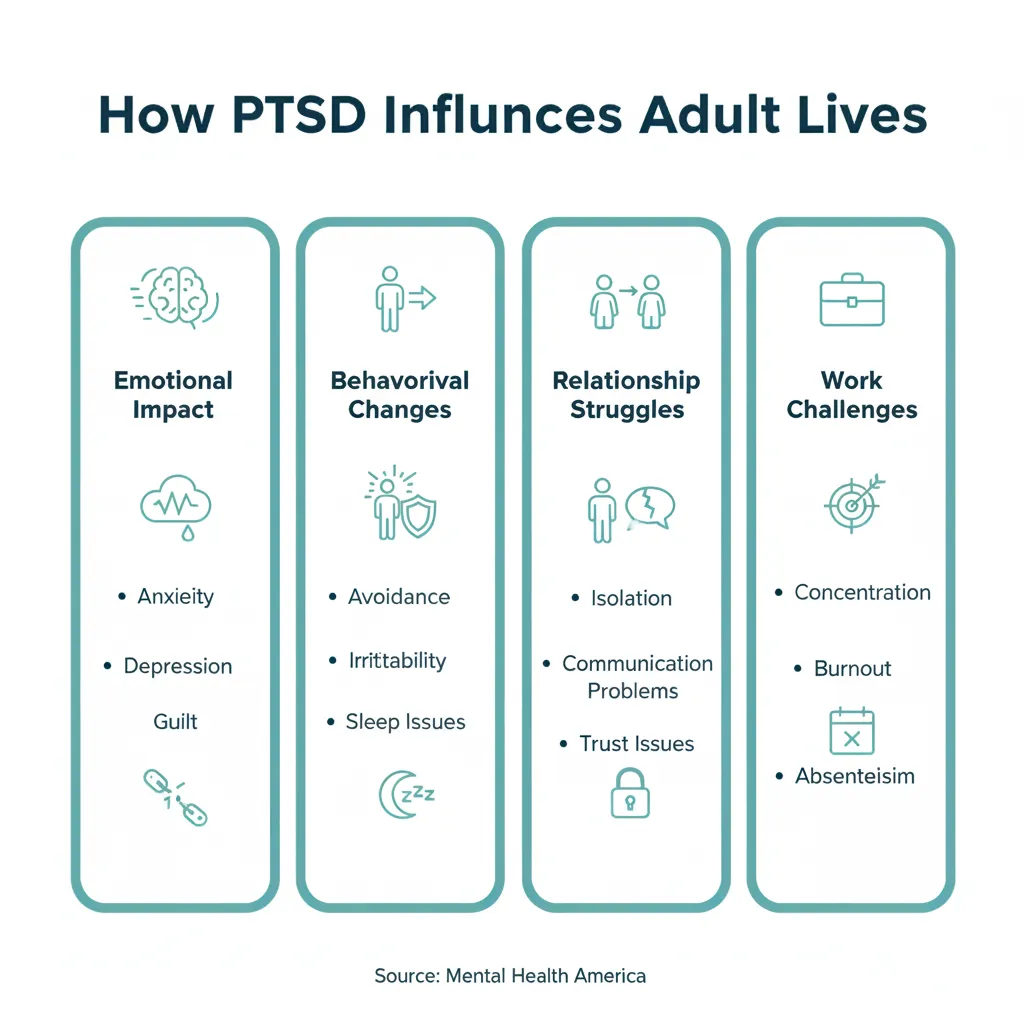
Living with PTSD can feel like navigating daily life with the weight of a past traumatic event constantly on your shoulders. This mental health condition can seep into every corner of your world, affecting your career, family life, and personal well-being. The impact on adult mental health is profound and requires compassionate understanding and effective mental health care.
From disrupting sleep to straining relationships, the effects are far-reaching. Consulting a mental health professional is a vital step toward reclaiming your life. Next, we will discuss the specific ways PTSD can influence work, social dynamics, and sleep, and why professional support is so important.
PTSD can make it challenging to keep up with work responsibilities. Symptoms like poor concentration, memory problems, and irritability can affect job performance and your ability to interact with colleagues. This can create a cycle of stress, where work pressures worsen your symptoms, and your symptoms make work more difficult.
Your social life and family dynamics can also suffer. Avoidance and emotional numbness may cause you to withdraw from friends and family, damaging your social support network. Loved ones may struggle to understand your behavior, leading to conflict and feelings of isolation. Your mental health history can also play a role in how these dynamics unfold.
PTSD can impact your life in several ways:
Yes, significant sleep disruption is one of the most common and distressing symptoms of PTSD. After a traumatic event, your mind and body can remain in a state of high alert, making it incredibly difficult to relax enough to fall or stay asleep. This persistent trouble sleeping can leave you feeling exhausted and on edge during the day.
Nightmares are also a hallmark of PTSD. You may experience vivid, terrifying dreams that replay the traumatic event or are related to its themes. These nightmares can feel so real that they cause you to wake up in a state of panic, making you afraid to go back to sleep.
This lack of restful sleep does more than just make you tired; it can worsen other PTSD symptoms like irritability, anxiety, and concentration problems. Addressing sleep disruption is often a key part of an effective treatment plan for PTSD, which may include medications such as selective serotonin reuptake inhibitors (SSRIs).
Navigating PTSD on your own can feel impossible, which is why trauma counseling and support are so critical. A mental health professional can provide a safe, nonjudgmental space to engage in techniques like eye movement desensitization and process your experiences and emotions. Professional treatment is not about erasing the past but learning how to manage its impact on your present.
Therapies like Cognitive Processing Therapy and Prolonged Exposure Therapy are specifically designed to help you confront and gain control of fear and control of fear. A therapist can equip you with coping strategies to manage symptoms, challenge negative thought patterns, and gradually re-engage with the world.
In addition to professional help, strong social support from family and friends is invaluable. Having people who listen and offer encouragement can reduce feelings of isolation and provide a sense of security, which is essential for healing.
Understanding the signs of PTSD in adults is crucial for fostering awareness and facilitating timely intervention. By recognizing emotional, physical, and behavioral symptoms, individuals, including survivors of similar traumatic events, can seek the necessary support and treatment. The impact of PTSD on daily life, relationships, and overall mental health cannot be overlooked. Remember that seeking help is a strength, not a weakness. If you or someone you know is struggling with PTSD, consider reaching out for professional help. Riaz Counseling offers expert support tailored to your needs. Don't hesitate—taking that first step towards healing can lead to a brighter future.
Trauma counseling provides a safe space to process traumatic memories with a mental health professional. This professional treatment helps you develop coping skills to manage PTSD symptoms, and through various clinical trials, it reframes negative thoughts while reducing feelings of fear and avoidance. It also helps rebuild social support systems, which are crucial for recovery.
In Houston, you can find a qualified mental health professional to help with PTSD by searching directories from organizations like the Substance Abuse and Mental Health Services Administration (SAMHSA) or their official gov website. For expert support and specialized mental health services, you can connect with a mental health provider at Riaz Counseling for professional health care.
For those seeking professional treatment for anxiety disorders, many centers in Houston offer cognitive behavioral therapy (CBT). Riaz Counselling is one of the top-rated centers providing these evidence-based mental health services. Their team, alongside Cleveland Clinic’s mental health experts, specializes in delivering effective mental health care to help clients manage symptoms and improve their well-being.
Yes, increased irritability and angry outbursts are common PTSD symptoms in adults. After a traumatic event, you might find yourself with a shorter temper or engaging in impulsive behavior. These changes in reactivity are significant indicators that a mental health professional can help you address as part of a PTSD treatment plan.
Absolutely. PTSD is a mental health condition that can cause numerous physical symptoms. Chronic stress from a traumatic event can lead to headaches, digestive issues, fatigue, and muscle tension. It's important to discuss these physical PTSD symptoms with a healthcare provider, as they are a key part of the diagnosis.
If you feel that you or someone you know, may benefit from therapy, please reach out to our office for a FREE 15 minute consultation: LINK
Stay informed about the latest research in psychology.
.png)
Navigating dual-parent family challenges with practical strategies for balance, communication, and well-being.
.png)
Benefits of dual-parent households in Houston for child development, stability, and well-being
.png)
Heal after a breakup in Houston with self-care strategies, local experiences, and professional counseling support.

Interested in a job with Riaz Counseling? Looking for Supervision for your license? Let’s Connect! We look forward to speaking with you to see if we would be a great fit for each other.
