
Going through a divorce can be one of the most stressful times in life. It can greatly affect your mental health and lead to various physical conditions. Many people may feel not just sadness, but also depressive symptoms, similar to, but not limited to, clinical depression that go beyond what is normal after a breakup. It is normal to have a hard time adjusting and to experience strong emotions. However, it is important to recognize when these feelings become more serious.
.webp)
Post-divorce depression is a type of sadness that happens after a marriage ends. This is more than just feeling a bit sad for a few days. It can last longer and can make it hard to get through everyday life.
It's important to know that feeling this way after a divorce does not mean you are weak. It is a normal reaction to a big life event that causes a feeling of loss. Understanding the signs of this type of depression is the first step to feeling better and making your life happy again.
The end of a marriage can bring many feelings. People may feel sad, angry, lonely, and sometimes relieved, all at the same time. These feelings are normal. They are part of the grieving process as you learn to cope with the loss of your relationship and the life you expected.
It’s important to recognize your feelings without judging them. Hiding or ignoring these emotions can make it harder to heal. Talking to friends, family, or a therapist can help. They can offer emotional support in a safe and understanding way.
Healing does not happen overnight. Be kind to yourself, and let yourself go through all your emotions. Don’t rush through the healing process.
Sadness is a normal part of life. However, post-divorce depression can be more challenging. It shows up in different ways and affects both your feelings and your body.
Emotionally, you may feel sad most of the time. You might lose interest in things you once enjoyed. Other signs include feelings of hopelessness or worthlessness and trouble focusing. You may also feel more irritable, anxious, and have a hard time managing your emotions.
Physically, you could notice changes in your sleep patterns, like trouble sleeping or sleeping too much. You may also have a change in appetite, feeling hungry or not wanting to eat at all. Low energy, tiredness, and unexplained aches and pains can happen too. It's important to recognize these symptoms so you can get help when you need it.
Several things can make a person more likely to feel depressed after a divorce. These things can be personal, social, or related to the situation. For instance, having mental health issues in the past, not having a strong support network, and dealing with money problems can all matter.
Also, the emotions that come with divorce, like feelings of guilt, failure, or rejection, can lead to depressive feelings, feelings of hopelessness and despair. It is important to know that everyone faces this stressful life event differently. What may cause depression for one person may not affect someone else in the same way.
Both men and women can feel sad after a divorce, which can disrupt their family unit. However, research shows there are some differences between the genders. Women experience depression more likely to say that they feel depressed after a divorce. This could be due to many reasons like societal expectations and how men and women handle emotions. Women often use support systems in a different way.
Men might not admit they are sad or ask for help. They feel pressure to look strong. This can lead them to act out in different ways, like substance abuse or anger. These behaviors can hide deeper mental health issues.
It is important to know that depression can affect anyone, no matter their gender. We need to promote open talks about mental health. It should be okay for both men and women to seek help after a divorce.
Individuals with mental health conditions, like anxiety or the risk of depression, may feel worse during and after a divorce, especially if they experience a similar level of mental distress. The stress and emotional challenges can make their symptoms stronger or cause them to get worse.
In addition, poor mental health can create problems in a marriage. This can increase the chances of a relationship breaking down. This link between mental health and relationships shows why it is important to treat any existing conditions with the right treatment options.
It's important to share your mental health history with your healthcare provider, especially during a divorce. They can change your treatment plans and give you extra support. This will help you get the care you need during this tough time.
.webp)
Managing divorce depression needs a well-rounded plan that looks at both emotional and practical parts of your well-being. It’s important to take active steps to take care of your mental health while dealing with the challenges that come after a divorce.
Using healthy coping skills, building a strong support network, and focusing on self-care can help make the transition easier and healthier during this period of adjustment. Remember, healing takes time and it is a slow process, not something that happens quickly.
One important step in dealing with post-divorce depression is to recognize your feelings and establish a course of action. Don’t ignore the pain, sadness, or anger when they come up. Let yourself feel these emotions without judging yourself. Trying to avoid these feelings may make it harder to heal and can keep depressive symptoms around longer.
Talk about how you feel with someone you trust. This could be a friend, family member, therapist, or a support group. Sharing can give you emotional support and make you feel understood. If you can’t say what you feel out loud, writing in a journal can help you express your emotions privately.
Keep in mind that recognizing your feelings shows strength and awareness. It is the first step to healing, growing, and moving forward.
Building a strong support system is key when facing the challenges after a divorce. This is especially true in a big city like Houston, Texas, in the United States. Meeting people who share your experiences can give you much-needed emotional support, helpful advice, and a feeling of belonging.
Think about joining a support group for people dealing with divorce or separation. These groups give you a safe and private place to share your stories, coping skills, and tips. Here are some options you can try:
Remember, you don’t need to face this alone. Reaching out can bring comfort, encouragement, and a sense of community during this time of change.
While it may seem hard to create a "new normal" after a divorce, having a daily routine can really help your state of mind. Doing things like waking up, eating, exercising, and going to bed at set times can bring you stability, normalcy, and control during this big change.
Having a night routine can help you sleep better and lessen the risk of insomnia, make you feel less hungry, and boost your energy. These are often problems when someone feels down. A schedule can also lessen feelings of stress and give you a clear plan for the day, which makes managing your tasks and responsibilities easier.
Start with small, easy goals every day, such as 20 to 40 minutes of brisk walking. This could be making your bed or taking a walk around the block. As you get more comfortable, add more activities. Even small steps in your routine can help improve your overall well-being.
.webp)
Making some lifestyle changes can really help with post-divorce depression. Focus on your physical health by exercising, eating well, and getting enough sleep. These things can lift your mood and boost your energy.
Keep in mind that even small changes, done regularly, can add up to a big impact. Begin by adding one or two healthy habits to your day. As you feel better and more motivated, you can add more.
Regular physical activity can greatly improve mental health benefits, particularly in relation to mental illness. This is especially true during tough times like divorce. Exercise releases endorphins, which help boost your mood and act as natural pain relievers. It can also lower stress, help you sleep better, give you more energy, and boost your self-esteem.
You do not have to do tough workouts to see these benefits. Begin with activities you like, such as brisk walking, swimming, dancing, or gardening. Even short periods of activity throughout the day can help.
Set realistic goals and slowly make your workouts harder or longer as you get fitter. Always talk to your doctor before starting a new exercise program, especially if you have any health issues.
The food we eat affects our physical and mental health, including our mood. When we are stressed or feeling emotional, it is important to choose healthy foods, such as dark chocolate, instead of unhealthy foods. This helps our emotional well-being. We should aim for a balanced diet that includes fruits, vegetables, whole grains, lean protein, and healthy fats.
We should stay away from processed foods, sugary drinks, and too much caffeine. These can cause energy drops and mood swings. Instead, choose wholesome snacks like nuts, seeds, yogurt, or fruit to boost your energy.
It’s also important to keep blood sugar levels steady by having regular and balanced meals. This can help improve your mood and reduce irritability or tiredness. If you find it hard to make healthy choices, think about speaking with a registered dietitian for personal advice.
Divorce can really affect how well you sleep. It can make you feel tired, irritable, and make it hard to focus. Getting good sleep is important for both your body and mind. It’s a good idea to have a regular sleep schedule, even on weekends. This helps your body get used to when to wake up and when to sleep.
You should also set up a calming routine before bed. This lets your body know it's time to relax. You could try taking an uninterrupted bath, reading a book, listening to soft music, or doing some gentle stretching.
Also, think about using relaxation techniques every day. This can help you handle stress and sleep better. Practices like deep breathing, meditation, or progressive muscle relaxation can soothe your nerves. They get you ready for a good night's sleep.
Sometimes, self-help and support from friends and family are not enough to cope with strong feelings of post-divorce depression. Knowing when to ask for help shows strength and awareness, not weakness.
If you feel sad for a long time, lose interest in things you used to enjoy, or have trouble functioning in your daily life, seek professional help. If these feelings last more than two weeks, don't wait. A mental health professional can help you find the tools and guidance to get through this tough time.
It is very important to know when you need help from a professional. If your depressive symptoms last too long, get worse, or make it hard for you to go through your daily life, you should get professional help. Don't ignore the signs or think you can handle it all on your own.
If you think about harming yourself or someone else, please call the National Suicide Prevention Lifeline at 988 right away or talk to a mental health professional for help. You are not alone, and there is no shame in asking for help during tough times.
A mental health professional can look at your symptoms, give you a proper diagnosis, and suggest the best treatment options for you. Remember, asking for help is a brave step towards feeling better and taking care of yourself.
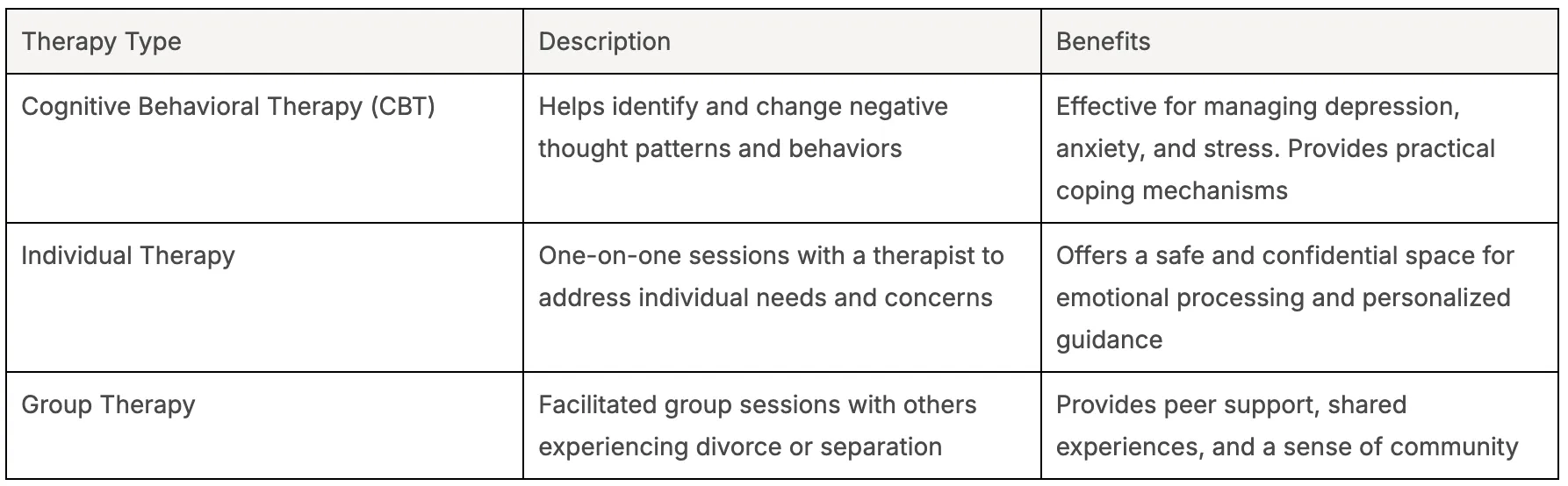
Houston offers various therapy options for those seeking professional help. From individual therapy to group counseling, you can find a setting that aligns with your needs and comfort level.
Many therapists specialize in divorce and separation, offering targeted support and coping strategies for navigating the emotional and logistical challenges of ending a marriage. One commonly recommended approach is Cognitive Behavioral Therapy (CBT), which focuses on identifying and modifying negative thought patterns and behaviors.
In addition to therapy, medication can help in managing depression. This is especially true for people with moderate to severe symptoms. Antidepressant medications help balance brain chemicals called neurotransmitters. These chemicals play a big part in controlling mood.
You should see a psychiatrist or a qualified doctor. They can help you decide if medication is right for you. They will look at your symptoms, medical history, and talk about the benefits and risks of using medication.
Always use medication under the care of a healthcare professional. Remember, medication works best when used with therapy and healthy lifestyle changes. These steps can help address the causes and triggers of depression.
Rebuilding your life after a divorce takes time and patience. It's also important to be kind to yourself during this process. This is a chance for you to find out who you are, look at new possibilities, and build a happy life on your own. Welcome this new chapter with an open heart. Let yourself enjoy new experiences and chances.
Houston has a lively and diverse community that provides many ways for personal growth and social connections. You can explore cultural events, join support groups, participate in fun activities, and network with others. Use these resources to create a life that fits your values and goals.
Rediscovering hobbies and interests that you might have put aside during your marriage is an important part of healing. Getting back to activities that make you happy, inspire you, or challenge your mind can help raise your self-esteem. It also gives you a sense of achievement and brings joy back into your daily life.
Think about the things you enjoyed before or during your marriage. Were there hobbies you stopped doing? Were there activities you always wanted to try but never did? Now is a great time to check out those interests without fear.
Joining a club, taking a class, or going to workshops for your hobbies can help you meet new people and learn new skills. Remember, following your passions is not selfish. It is an important part of self-care and helps you find out who you are beyond your past relationship.
Navigating dating after divorce can feel tough. But it’s also a chance to learn about yourself and make new friends. It is important to date with self-awareness, patience, and realistic expectations.
Don’t rush into a rebound relationship just to avoid feeling lonely. Take time to heal emotionally after your marriage. Think about your past relationship and figure out what you truly want and need in a partner.
When you are ready to date again, enjoy meeting new people. Explore shared interests and work on building real connections. Always remember to communicate openly with potential partners about your past and your needs.
Divorce can change your finances a lot. This can make a tough situation even harder. To ease some of the stress, make a budget that you can follow. You should also look for new ways to earn money if you need to. Getting help from a financial expert can make things easier too.
Don’t be afraid to ask your support network for help. They can offer temporary money support, job information, or tips on how to manage your spending at home. Keep in mind that your family and friends want to help you. Asking for their support shows strength, not weakness.
Also, remember that finding financial stability will take much time and effort. Be kind to yourself during this process. Focus on your financial health, and don’t hesitate to ask for professional help when you need it.
In conclusion, post-divorce depression is a tough emotional journey. It needs understanding, support, and caring for yourself. It is important to acknowledge your feelings. Setting up a strong support system in Houston is key. You should also find comfort in daily activities. Making some lifestyle changes can help your emotional health. This includes being active, eating well, getting enough sleep, and practicing relaxation techniques. Knowing when to get professional help is also critical. Therapy and medication can be useful to manage depression. Moving forward after divorce means rediscovering what you enjoy, dating again, and keeping your finances stable. Remember, asking for help is okay. Take small steps to rebuild your life in Houston.
The length of feeling sad after a divorce can differ from person to person. Some people may have a hard time for a few months, experiencing a range of emotions, which is called an adjustment disorder. Others may feel this way for a longer time. Everyone heals differently. Getting support can help you through this tough time.
Yes, Houston has many support groups for people dealing with post-divorce depression. These groups provide emotional support and resources to help you handle the challenges of this change in your life.
Exercise is good for your mental health. Regular exercise can improve your mood. When you do physical activity often, it helps release endorphins. These are natural chemicals that make you feel happy. Exercise also reduces stress hormones and helps you sleep better. All of this has a positive effect on your mental health.
When you feel overwhelmed, the last thing to focus on is getting support. Talk to a trusted friend or a family member. You can also speak with a mental health professional. Practicing self-care can help too. Try things like exercise and relaxation techniques. These can help you deal with strong emotions.
Yes, it is normal to feel guilt after starting a divorce. The divorce process can bring about a lot of different emotions. It is important to let yourself feel these emotions without judging yourself.
Stay informed about the latest research in psychology.
.png)
Navigating dual-parent family challenges with practical strategies for balance, communication, and well-being.
.png)
Benefits of dual-parent households in Houston for child development, stability, and well-being
.png)
Heal after a breakup in Houston with self-care strategies, local experiences, and professional counseling support.

Interested in a job with Riaz Counseling? Looking for Supervision for your license? Let’s Connect! We look forward to speaking with you to see if we would be a great fit for each other.
